Hiring a scooter is one of the first things many visitors do after landing in Thailand, and a jet ski on a beach in Phuket or Pattaya is not far behind. Both are legal if you have the right licence and treat the hire carefully, and both are a common source of fines, insurance problems and arguments over damage. This independent guide sets out what Thai law and official travel advice actually say.
TL;DR
- The licence must match the vehicle. A scooter is a motorcycle in Thai law. You need a motorcycle licence and an International Driving Permit that shows the motorcycle category, or a Thai motorcycle licence.
- Helmets are compulsory for the rider and the passenger. The fine is up to 2,000 baht, and it is doubled if your passenger has no helmet.
- Never leave your passport as a deposit, and photograph the scooter or jet ski before and after the hire. In a dispute, call the Tourist Police on 1155.
The licence you need for a scooter or motorbike
Under Thai rules, the licence has to match the vehicle. Official travel advice from Australia, Canada and the United Kingdom is consistent: to ride a motorcycle you need a valid motorcycle licence, and the International Driving Permit (IDP) you carry with it has to cover the same type of vehicle. Canada's travel advice states that it is illegal to operate a motorcycle in Thailand without a valid Thai motorcycle licence or an IDP with a motorcycle endorsement.
An IDP is a translation of your national licence, not a new entitlement. If your home licence covers cars only, the permit will usually show category B and will not authorise a scooter or motorbike. The motorcycle category, typically marked as category A (or, depending on your country, AM, A1 or A2), has to appear on both documents. A 110cc or 125cc automatic scooter is still a motorcycle: when Thailand ratified the 1968 Vienna Convention on Road Traffic, it declared that it treats mopeds as motorcycles.
Rental shops in tourist areas often hand over a bike with little more than a deposit and a passport copy. That is not a legal test. Carry the physical IDP booklet and the original national licence, not photographs of them. The Royal Thai Embassy in London also says you should be ready to show your passport with those documents when asked.
1949 or 1968: which IDP does Thailand accept?
There are two common types of IDP: one under the 1949 Geneva Convention on Road Traffic, and one under the 1968 Vienna Convention.
A Thai government guide, citing the Department of Land Transport, lists a 1949 Geneva Convention IDP, or a licence issued by another ASEAN member country, as foreign documents that can be used in Thailand. Thailand also ratified the 1968 Vienna Convention on 1 May 2020; the United Nations depositary records that it entered into force for Thailand on 1 May 2021.
Because the two conventions overlap, the permit you need can depend on your home country. The UK government tells British drivers to carry a 1968 IDP together with their UK licence, and to get it before leaving the UK. Travellers from other countries should get the type of IDP their own authorities issue for Thailand, check that the motorcycle category is marked, and carry it with the licence it was issued against. Check the expiry date on the permit; it is not valid without the national licence. If you already live in Thailand, a Thai motorcycle licence is the clearer long-term option.
Helmets, checkpoints and unregistered bikes
By law, both the rider and the passenger on a motorcycle must wear a helmet. This is set out in section 122 of Thailand's Land Traffic Act, and the United Kingdom, Australia and Canada all repeat it. According to the Government Public Relations Department and the Royal Thai Police, the fine is not more than 2,000 baht, and is doubled if you ride with a passenger who is not wearing a helmet. Since 1 June 2025 the police have enforced the rule strictly under their Safe Roads Project, on roads chosen by each provincial command.
Police operate checkpoints in cities and on island and beach roads, and may ask for your licence, IDP and the bike's documents. The UK government warns that motorcycles and scooters for hire in tourist areas are often unregistered and cannot be used legally on a public road. Before you ride away, check that the bike has a visible number plate and that the shop can show registration and insurance papers for that vehicle. If you ride without the correct licence, you can be fined; Australian official advice also says you could be arrested or jailed. A shop's willingness to rent you the bike is not protection from either outcome.
Insurance: travel cover and compulsory motor insurance
A valid licence is also an insurance question. The UK government says that if you drive a car or ride a motorcycle in Thailand without a valid licence, it could invalidate your travel insurance, and you would be unable to claim after an accident or injury. Canada says insurance claims could be denied if you were riding without a motorcycle licence. Australia adds that if you are in an accident, police may detain you until compensation is agreed, and that you could be responsible for damage and injury costs. Before you hire, read your travel policy: many exclude motorcycles, or only cover them with an add-on, a helmet and an engine-size limit, and may require the licence you would need at home for that machine.
Separately, Thai law requires motorcycles to carry compulsory motor insurance, often called Phor Ror Bor (or Por Ror Bor), when they are registered with the Department of Land Transport. Official hospital guidance from the Ministry of Public Health explains that this cover is for injury to people, not for damage to the vehicle or other property. It does not replace travel insurance or comprehensive cover. Australia's travel advice notes that many hire companies do not have insurance, and tells travellers to confirm comprehensive and third-party cover and to know the excess. Ask to see, and photograph, the insurance papers for the specific bike.
Do not leave your passport as a deposit
Official travel advice from the United Kingdom, Australia and Canada is unambiguous: do not hand your passport to a motorcycle or jet-ski rental business as a guarantee or deposit. Companies may hold on to the passport and demand payment for claimed damage. Canada's advice adds that if a Canadian passport is withheld in this way, the holder may face an investigation by the passport authority and limited passport services later. Offer a cash deposit, a card hold or a photocopy of the passport photo page instead, and keep the original with you. If a shop will not rent without the passport, go elsewhere.
Photograph and video the bike before you take it, in daylight, including every panel, the lights, mirrors, wheels, the odometer and any existing scratches or cracks. Do the same for the helmet if one is provided. Ask the shop to note pre-existing damage on the contract, keep a signed copy, and repeat the photos when you return the bike. Do not leave until the deposit arrangement is clear.
Sort the arrival card before you pick up the keys
We check every field against your passport, file inside the 3-day window and email you the QR code. Families and groups in one order.
Start TDAC ApplicationRenting a jet ski
Damage disputes after a jet-ski hire are a well-known problem at popular beaches, including in Phuket and Pattaya. Official travel advice describes a familiar pattern: the operator asks for a passport or a large deposit, then claims the machine is damaged when you return and withholds your documents until you pay.
If you still want to hire one:
- Use an operator with a registered business, a written contract and visible premises, not a person with a single machine and no paperwork.
- Agree the price, the time limit and the fuel rules in writing before you start.
- Photograph and video the jet ski on all sides, including the hull, bumpers and existing marks, before you enter the water, and again when you return.
- Do not leave your passport as collateral.
- Check whether your travel insurance covers jet-skiing; adventure or water-sport activities are often excluded unless you add them.
If a dispute starts, do not get drawn into an argument on the beach. Call the Tourist Police on 1155. The Tourist Police are a unit of the Royal Thai Police, and 1155 is their 24-hour hotline. Official Australian advice is to contact them if you need help in a transport dispute. Regular police can be reached on 191.
Getting a Thai driving licence
If you are staying longer, a Thai licence removes the doubt about which IDP you are carrying. The Thai government portal, citing the Department of Land Transport, says that foreign tourists whose licence cannot be used in Thailand can apply for a temporary driving licence, valid for 30 days, at the Provincial Land Transport Office in the province they have entered. The documents listed are a passport with at least six months' validity, a certificate of address from the tour operator, a medical certificate not more than one month old, and a still-valid foreign licence of the same type, with a Thai translation from an authorised agency. The process is a physical fitness test, a one-hour training session, and fees of 205 baht for the licence and 100 baht for the photo and plastic card.
For people who stay in Thailand for longer on a non-tourist visa, the route is different. The Royal Thai Embassy in London describes a temporary one-year Thai licence issued by the Department of Land Transport or a Provincial Land Transport Office. The documents include a passport with an appropriate visa other than a tourist visa, proof of residence attested by your embassy or a work permit, a medical certificate not more than one month old, and your international or national licence, with an embassy-attested translation if it is not in English. The UK government notes that British nationals who live in Thailand can apply using their UK licence. The embassy says you can apply directly at the Department and do not need to go through an agency. Confirm the current list with the Department of Land Transport (tel. +66 2271 8888, dlt.go.th), as requirements can vary by office and visa type.
Cars, taxis and tuk-tuks
The same licence logic applies to cars. You need a valid car licence and, in most cases, an IDP that shows the car category, usually category B. A motorcycle-only licence does not cover a rental car. Traffic in Thailand keeps to the left. Official Canadian advice says you must be at least 18 to drive a car; Australian advice gives 18 for a car and 15 for a motorcycle under Thai rules. Carry your licence, IDP and the vehicle's documents. Official advice from several governments singles out motorcycles as the greatest road-safety risk, especially where alcohol is involved. Do not drink and drive or drink and ride. If you are not an experienced rider, a licensed taxi or a reputable rideshare is the safer choice.
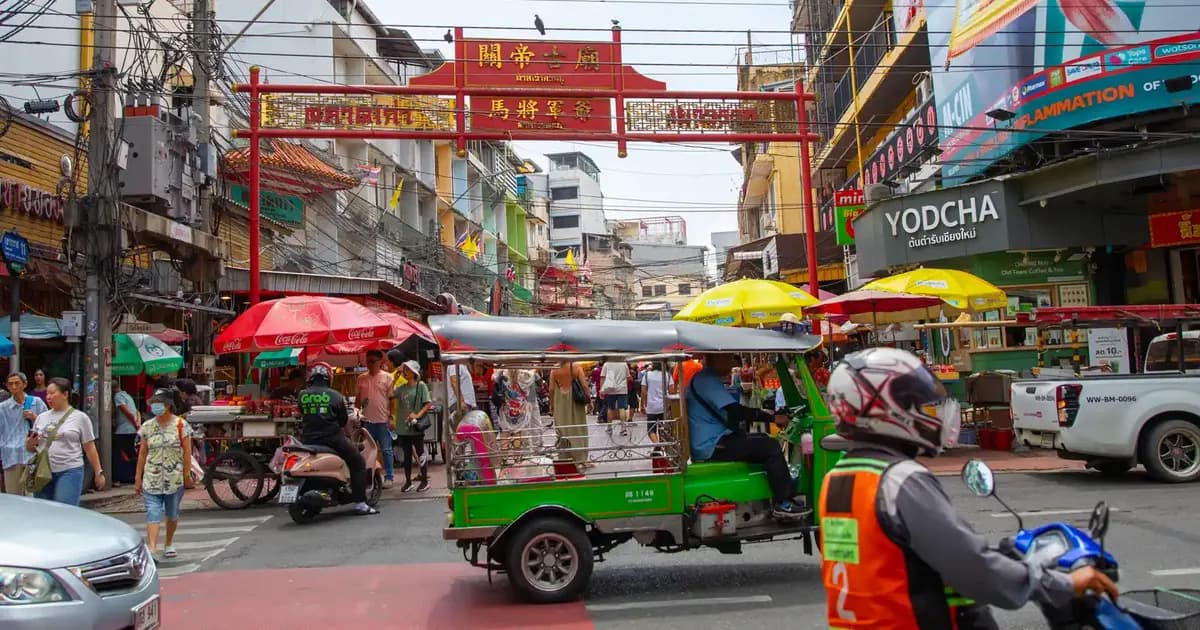
For taxis, official Australian advice is to use licensed, metered taxis from official ranks, by phone, through your hotel or a reputable rideshare app, and to insist on the meter. Check that the driver's identification card is visible. Before you get into an unmetered taxi, a tuk-tuk or a motorcycle taxi, agree the fare and the route. Be cautious of drivers who offer a cheap tour and then take you to shops where they receive a commission. If a dispute starts, do not confront the driver; call the Tourist Police on 1155. Around airports and stations, check that a rideshare vehicle and driver match the details in the app.
Arriving in Thailand
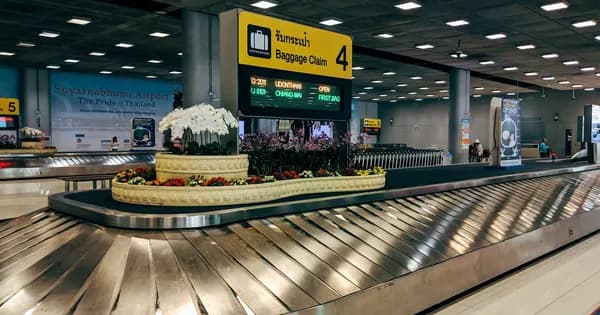
None of this changes the entry rules. Every foreign visitor still needs a Thailand Digital Arrival Card (TDAC) before landing, submitted within the 3 days before arrival on the Immigration Bureau site at tdac.immigration.go.th. TDAC.info is an independent guide to the card and to Thailand's entry rules, in 28 languages, and is not a government site. Our step-by-step TDAC guide shows every field.
Frequently asked questions
Can I ride a rented scooter on a car-only licence?
Which International Driving Permit does Thailand accept?
Do I have to wear a helmet?
Should I leave my passport with the rental shop?
What should I do if a jet-ski operator claims I caused damage?
Official sources
- Royal Thai Embassy, London: Driving in Thailand
- THAILAND.GO.TH: steps for obtaining a temporary driver's license for foreign tourists
- United Nations Treaty Collection: C.N.153.2020, Thailand ratification of the 1968 Convention on Road Traffic
- UK FCDO: Thailand travel advice, safety and security
- GOV.UK: Check if you need an international driving permit
- Australian Government, Smartraveller: Thailand travel advice
- Government of Canada: Thailand travel advice
- Government Public Relations Department: motorcycle helmet enforcement, 30 May 2025
- Royal Thai Police, Public Affairs Division: Safe Roads Project, 27 May 2025
- Tourist Police Bureau: hotline 1155
- Koh Samui Hospital, Ministry of Public Health: Phor Ror Bor compulsory motor insurance
- U.S. Department of State: Thailand international travel information
- Immigration Bureau: Thailand Digital Arrival Card
- Department of Land Transport
Related guides
- TDAC guide
- How to fill in the TDAC, step by step
- Suvarnabhumi Airport arrival guide
- Thailand customs rules: vapes, drones and vaccines
TDAC.info is an independent service and is not affiliated with the Thai Government, the Immigration Bureau, the Department of Land Transport or the Royal Thai Police. We checked the official pages listed above on 26 November 2026. Licence, insurance and fine rules can change; confirm the current position with the relevant authority before you hire a vehicle.
Sort the arrival card before you pick up the keys
We check every field against your passport, file inside the 3-day window and email you the QR code. Families and groups in one order.
Start TDAC ApplicationReviewed by
Jason Hartley
Travel Documentation Specialist · TDAC.info
Last reviewed on
Fact-checked against the official Thai Immigration Bureau guidance.